
OTAR® Projects & Case Studies — Australia
Proven Ammonia Recovery Projects
This page presents selected OTAR® project references demonstrating proven ammonia removal performance across high-strength wastewater streams. These examples highlight how OTAR® supports regulatory compliance, operational stability, and resource recovery outcomes relevant to Australian wastewater and industrial applications.
Australia’s Ammonia Treatment Challenge
Australian utilities and industries are increasingly required to manage high ammonia loads while meeting strict discharge limits, including 5 mg/L total nitrogen (TN) in sensitive catchments. Streams such as landfill leachate, AD centrate, and industrial return liquors can overwhelm conventional biological treatment, increasing risk from ammonia shock loads and driving up operating costs — particularly for wastewater solution technology in Sydney and NSW.
OTAR® Solution Overview

The OTAR® ammonia recovery system is a thermally driven, non-biological ammonia stripping technology designed for high-strength wastewater. OTAR® removes ammonia upstream, protecting biological reactors from ammonia shock load, while enabling consistent effluent ammonia reduction to <100 mg/L or lower when integrated with polishing treatment.
OTAR® is suitable for:
- Landfill leachate treatment
- AD centrate and THP return liquor
- Food and industrial wastewater
- Ammonia removal from refinery sour water in Australia
Its thermal stripping approach allows reliable performance even at extreme ammonia concentrations where biological systems struggle.
Case Study: Long-Term Ammonia Recovery
The Challenge: High-Strength Nitrogen Removal for Australian Industry
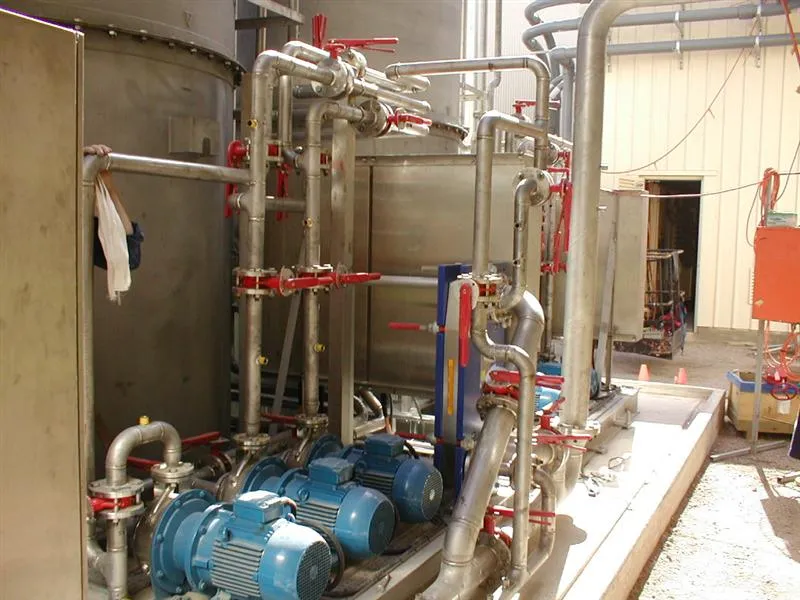
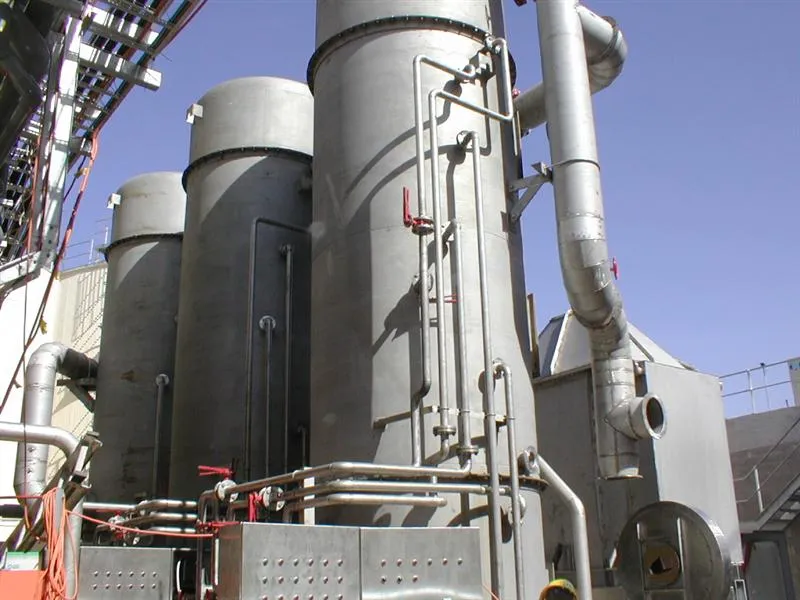
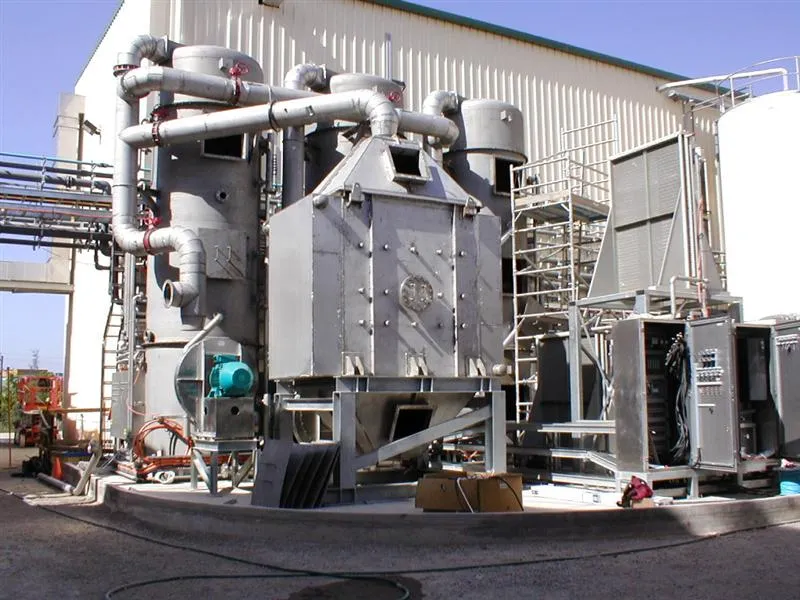
In early 2002, a major Australian industrial facility required a robust solution to manage high-strength ammonia concentrations in their wastewater stream. The primary goal was to achieve strict environmental compliance while maintaining a low-energy footprint in a regional setting.
The Solution: OTAR® Thermal Ammonia Recovery
Organics was commissioned to provide a full EPC solution, delivering a custom-engineered OTAR® (Organics Thermal Ammonia Recovery) system. Unlike biological alternatives that struggle with high nitrogen loads, the OTAR® unit was selected for its ability to handle concentrated streams with minimal chemical intervention.
Project Specifications & Performance
-
Project ID: Q3000 (Australia)
-
Commissioning Date: March 2002
-
Design Flow Rate: 12.5 m³/hr
-
Influent Concentration (NH3/NH4): 1,875 mg/L
-
Primary Outcome: Successful reduction of ammonia to compliant discharge levels, protecting local biological assets and avoiding significant EPA penalties.
Why This Project Matters
-
20+ Years of Operational Integrity: Project Q3000 demonstrates the extreme durability of Organics’ engineering. While many systems require replacement every 10 years, our Australian installations continue to provide reliable nitrogen removal decades later.
-
Proven Scale: Handling 1,875 mg/L of ammonia at a steady 12.5 m³/hr flow rate highlights our capability in utility-scale wastewater treatment.
-
Low OPEX: By utilizing thermal stripping over chemical dosing, the facility has avoided 20+ years of rising chemical costs, significantly improving the Total Cost of Ownership (TCO).
OTAR® Other Reference Project
West New Territories, Hong Kong – Line 1 & 2
OTAR® was deployed to treat high-strength landfill leachate with influent ammonia concentrations of up to 6,700 mg/L NH₄-N at feed flows of approximately 1,000–2,300 m³/day. The system consistently reduced ammonia to <100 mg/L, stabilising downstream treatment and enabling compliance with stringent nitrogen discharge limits.
South East New Territories, Hong Kong
This OTAR® installation treats concentrated landfill leachate with influent ammonia levels in the range of 4,000–6,000 mg/L and variable daily flows. By removing ammonia upstream of biological treatment, the system reduced shock loading risk and improved overall process reliability under fluctuating operating conditions.
Northumbrian Water, United Kingdom
OTAR® was applied to municipal sidestream treatment, processing return liquors with ammonia concentrations of approximately 3,500–5,000 mg/L at flows of 50–300 m³/day. The system protected biological reactors from ammonia shock load while supporting stable nitrification performance across the main treatment works.
West New Territories, Hong Kong – Line 3
As a further expansion at the same landfill site, OTAR® Line 3 demonstrates scalable deployment treating leachate with ammonia concentrations exceeding 5,000 mg/L. Operating in parallel with existing lines, the system delivers consistent ammonia reduction while integrating with available waste heat sources.
North East New Territories, Hong Kong – Line 2
This project treats high-ammonia landfill leachate with influent concentrations typically between 4,500–6,500 mg/L, at feed flows of up to 1,000 m³/day. OTAR® maintained robust performance despite variable loading, supporting regulatory compliance and downstream biological process protection.
O·Park 1 (Hong Kong Organic Waste Treatment Facility)
At O·Park 1, OTAR® manages ammonia-rich process liquors generated from large-scale organic waste treatment and anaerobic digestion. Treating streams with ammonia concentrations of 3,000–5,000 mg/L, the system supports stable operation of the integrated waste-to-energy facility while maintaining compliance with discharge requirements.
Why OTAR® ?
Cost efficiency
Compared with conventional biological nitrogen removal or chemical stripping, OTAR® provides a robust alternative for high-ammonia streams. It avoids biological inhibition risks and reduces dependency on chemical dosing, improving predictability when evaluating the cost of ammonia stripping for landfill leachate and other concentrated wastewaters.
-
Protects downstream biological treatment assets
-
Reduces lifecycle operating risk
-
Supports circular economy and ESG goals
Compliance & Resource Recovery Value
OTAR® supports compliance with tightening nitrogen regulations while creating opportunities for value recovery. By converting ammonia into ammonium sulphate or ammonium hydroxide, facilities can improve ROI for converting wastewater ammonia to fertiliser, transforming a regulatory burden into a recoverable resource.
-
Enables compliance with strict ammonia and 5 mg/L TN discharge standards
-
Adaptable to Australian utility and industrial conditions
Why OTAR® ?
Cost efficiency
Compared with conventional biological nitrogen removal or chemical stripping, OTAR® provides a robust alternative for high-ammonia streams. It avoids biological inhibition risks and reduces dependency on chemical dosing, improving predictability when evaluating the cost of ammonia stripping for landfill leachate and other concentrated wastewaters.
Compliance & Resource Recovery Value
OTAR® supports compliance with tightening nitrogen regulations while creating opportunities for value recovery. By converting ammonia into ammonium sulphate or ammonium hydroxide, facilities can improve ROI for converting wastewater ammonia to fertiliser, transforming a regulatory burden into a recoverable resource.
Calculator: Plan with Confidence

Understand the business case for your wastewater treatment plant.
Our online calculator helps you model:
-
Typical cost savings from replacing conventional methods with OTAR®
-
Reduction in chemical usage compared to standard treatment
-
Carbon-emission savings and compliance with environmental regulations
-
ROI, payback period, and sustainability impact for your operations
Understand how OTAR® supports your business in meeting carbon emission goals and regulatory requirements.
Let’s Build Your Waste water treatment Solution
Fill out a quick questionnaire and let our team walk you through a personalized plan.
Work With Environmental Engineering Expert
Click here to contact our team!
Let’s Build Your Wastewater treatment Solution
Fill out a quick questionnaire and let our team walk you through a personalized plan.